
Chlorine keeps pools clean, but it’s rough on nails. After a few swim sessions, nails can feel brittle, peel at the edges, or look dull. The good news is you can protect nails from chlorine with a few simple habits — and regular visits to our Lafayette salon make a real difference.
Why Chlorine Weakens Nails
Chlorine is a disinfectant. It works by breaking down organic matter in pool water, and that includes the natural oils and proteins in your nails. When nails lose moisture and their protective lipid layer, they become dry and inflexible. That’s when you see splitting, peeling, and breakage. The American Academy of Dermatology notes that keeping nails clean and dry helps prevent breakage, but chlorine exposure works against that goal.
Frequent swimmers often notice white spots or a chalky texture on the nail surface. This isn’t a fungus — it’s dehydration. Nails are porous, so they absorb pool chemicals. Once the nail plate dries out, it can’t flex normally, and small impacts cause cracks instead of bending. That’s why a nail that survived all winter suddenly tears in July.
What Happens to Nails During a Swim
Pool water isn’t just chlorinated. It’s often balanced with other chemicals that shift the pH, and that combination strips the nail’s surface. The longer you swim, the more exposure your nails get. Kids who spend hours in the pool, lap swimmers, and anyone doing water aerobics are all at risk.
We see the damage at Pandora Nail Spa every summer. Clients come in with nails that have peeled in layers, cuticles that are cracked and sore, and polish that lifted within days. The fix isn’t to avoid swimming. It’s to prepare nails before you get in the water and to restore them after.
Protect Nails from Chlorine Before You Swim
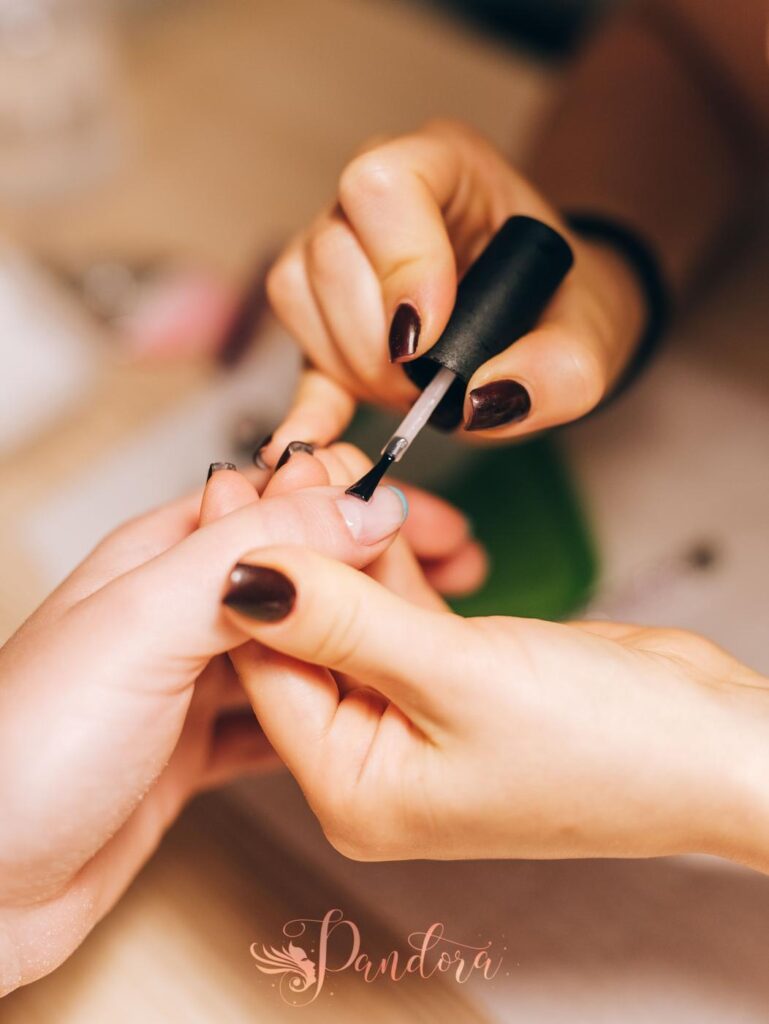
The best defense is a barrier. A quality base coat or a full manicure with regular polish creates a physical layer between your nail and the water. For even stronger protection, gel extensions or dip powder nails seal the nail completely and hold up to repeated chlorine exposure far better than bare nails.
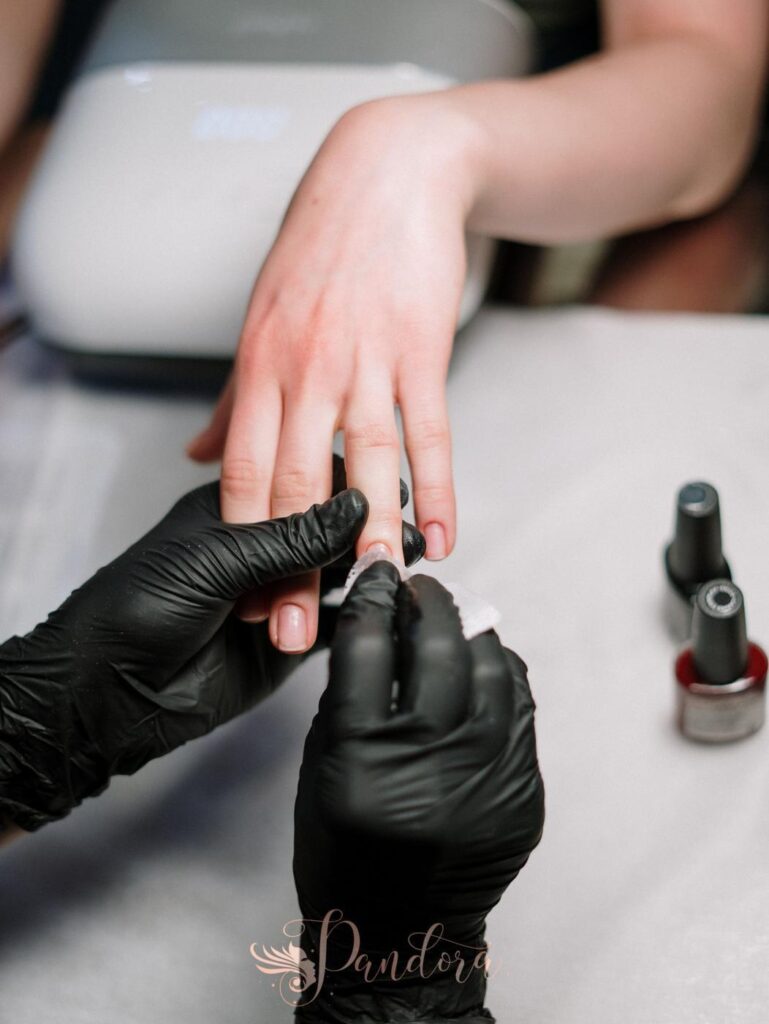
Before a swim-heavy week, book a manicure at our Lafayette salon. We’ll shape the nails to remove any existing weak spots, push back cuticles gently, and apply a strengthening base coat. That base coat alone reduces how much pool water the nail absorbs. If you prefer color, gel polish is a smart choice because it bonds tightly to the nail and resists lifting.
Right After the Pool: Rinse and Moisturize
Chlorine keeps working as long as it sits on your skin and nails. Rinse your hands with fresh water as soon as you get out of the pool, then apply a hand cream or cuticle oil. This stops the chemical from drying the nail further and starts restoring moisture immediately.
At the salon, we always finish a manicure with cuticle oil and a rich lotion. That’s not just for polish. Hydrated nails bend instead of break. If you’re swimming daily, carry a small cuticle oil in your swim bag and use it after every rinse. It takes ten seconds and makes a noticeable difference by the end of the season.
Why Regular Salon Manicures Help
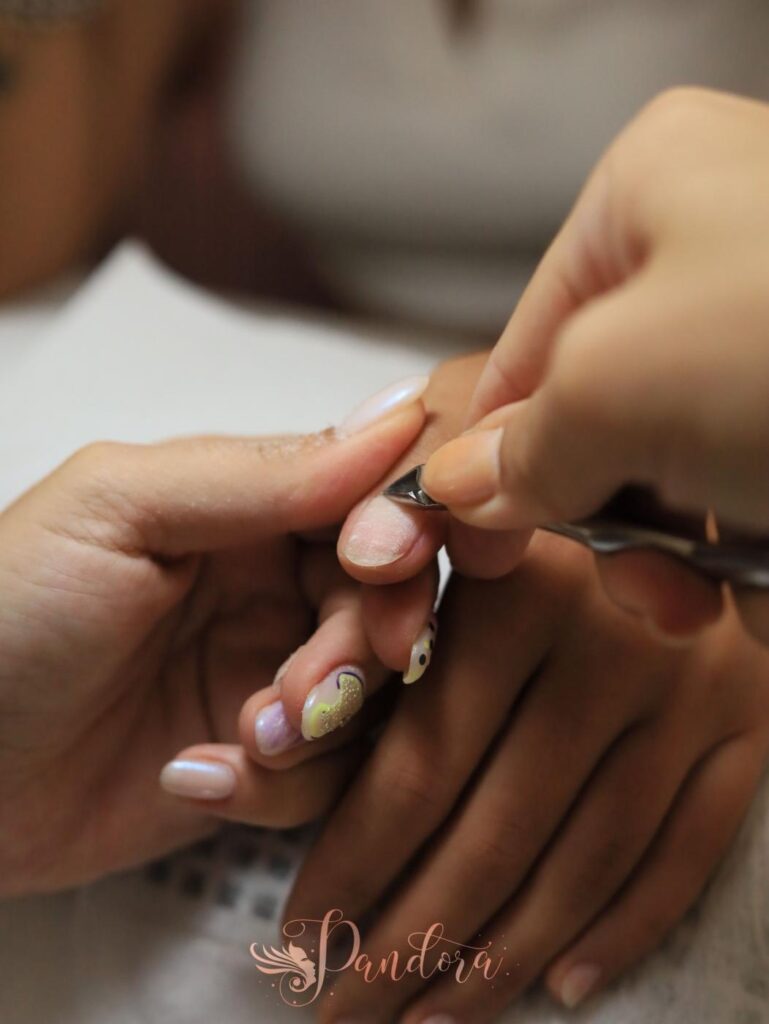
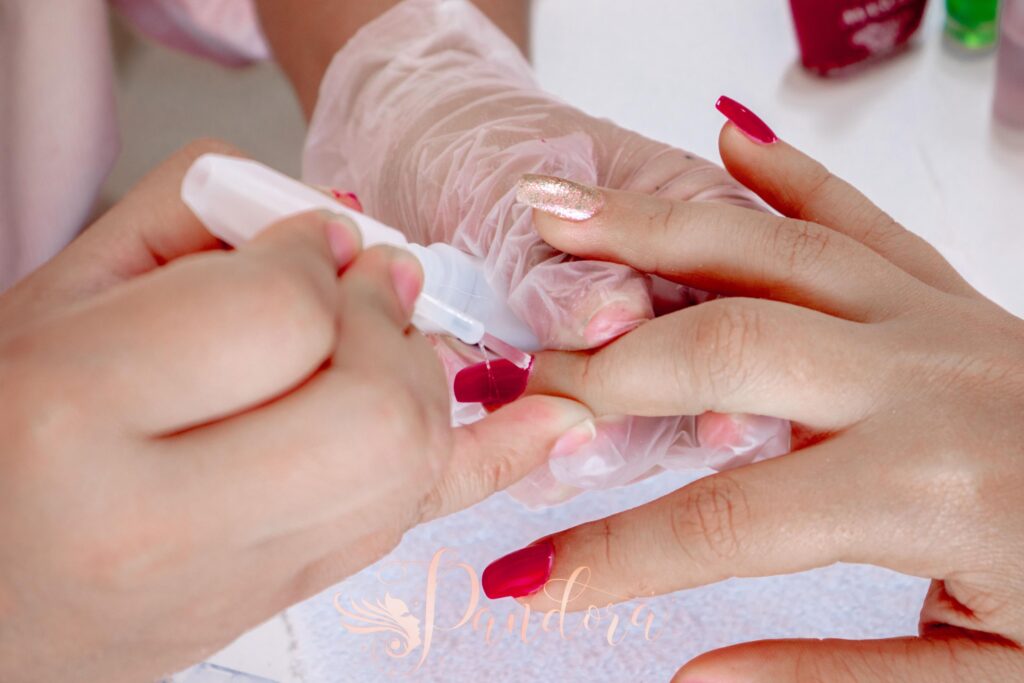
Home care helps, but it can’t replace professional attention. Our technicians see early signs of chlorine damage — micro-peeling at the free edge, dullness, cuticle inflammation — before they become painful splits. During a manicure at Pandora Nail Spa, we trim away damaged nail, smooth the surface, and apply products that actually penetrate and strengthen the nail plate.
We also remove polish safely. Trying to peel off gel or dip powder at home tears layers of the nail with it, which makes chlorine damage worse. Let us do the removal. It’s faster, gentler, and your nails stay intact for the next swim. If you’re in the Lamorinda area, our Lamorinda nail spa is easy to reach from Moraga and Orinda too.
Signs Your Nails Need a Break from Chlorine
Watch for these changes. If you notice two or more, book a strengthening manicure soon:
- Peeling or flaking at the tips
- Nails that bend easily or feel soft
- White spots or chalky patches
- Cuticles that are red, cracked, or peeling
- Polish that lifts or chips within two days of a manicure
These signs mean the nail is losing its structure. A professional manicure removes the damaged portion and gives the healthy nail underneath a chance to grow out strong. Waiting usually leads to a painful break at the quick.
How to Keep Nails Strong All Summer
Consistency matters more than any single product. Keep nails trimmed to a practical length — long nails catch on pool ladders and lane ropes. File in one direction to avoid micro-tears. Moisturize your hands and cuticles every night, not just after swimming. And book a manicure every two to three weeks during swim season.
That schedule lets us catch damage early, refresh your protective polish, and keep your nails hydrated with professional-grade products. It’s the same advice we give runners and hikers in Lafayette: your hands and feet take a beating from your favorite activity, and regular care is what keeps them healthy. For example, our pedicure after hiking tips apply the same principle to feet.
What About Kids and Teens?
Chlorine damage isn’t just an adult problem. Kids who spend all day at the pool often have the worst peeling nails because they never moisturize and rarely get professional care. A simple kids’ manicure at our salon is a fun way to protect those nails. We use gentle products and keep the experience quick and comfortable.
Teens who swim competitively need even more protection. Daily chlorine exposure plus frequent hand washing breaks nails down fast. A gel manicure every two weeks gives them a durable barrier and keeps nails looking neat for meets and school. We’re happy to explain the options to both parents and teens.
Book Your Chlorine-Protection Manicure in Lafayette
Summer in the East Bay means pool season, and pool season means your nails need backup. Protect nails from chlorine with a professional manicure at Pandora Nail Spa. Our technicians understand exactly what chlorine does to nails and how to stop the damage before it starts.
Book your appointment at our Lafayette salon, or call (925) 284-7700. We’ll get your nails swim-ready and keep them strong all season long.
FAQ
Does chlorine damage nails?
Yes, chlorine strips natural oils and moisture from nails, leaving them brittle, weak, and prone to peeling or splitting. Regular professional manicures help counteract this damage.
How can I protect my nails from chlorine?
Apply a protective base coat before swimming, rinse nails with fresh water immediately after, and keep them moisturized. For best results, book a strengthening manicure at Pandora Nail Spa.
Should I get a manicure before or after swimming?
Both help. A manicure before swimming provides a protective layer, while one after restores moisture and repairs any damage. Our technicians in Lafayette can advise on the best timing for your routine.
Can nail polish protect nails from chlorine?
Yes, nail polish acts as a barrier that reduces direct chlorine contact. Gel polish or dip powder offers even stronger protection and lasts longer through frequent swimming.
Swimming should be fun, not a reason to hide your hands. With the right preparation and regular salon care, your nails can survive every lap, cannonball, and pool party this summer.
Related at Pandora Nail Spa: Aging Hands Care: 8 Salon Secrets for Youthful Nails
Disclaimer: For general education only; based on reputable sources linked above and not medical advice. For any health concern, see a licensed physician or dermatologist. For personalized nail services, book an appointment at our Lafayette salon.